Bar chart
Definition
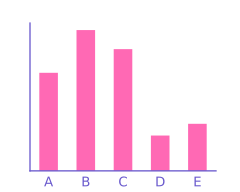
Type of chart showing the relationship between a categorical and a numeric variable.
Also known as
Bar graph, column chart, column graph
Summary
A bar chart displays categorical data using rectangular bars where the length or height of each bar is proportional to the value it represents. This fundamental visualization type enables direct comparison of quantities across different categories. Bar charts can be oriented vertically (with bars rising from a baseline) or horizontally (with bars extending from a vertical axis).
Anatomy
- Axes: Two perpendicular axes where one represents categories (typically the x-axis for vertical bars) and the other represents numeric values (typically the y-axis for vertical bars)
- Bars: Rectangular shapes with uniform width, where length encodes the quantitative value for each category
- Baseline: Usually starts at zero to ensure accurate visual comparison
- Labels: Category names and numeric values or tick marks to identify what each bar represents
- Spacing: Gaps between bars that distinguish discrete categories from continuous data
Interpreting a bar chart
Reading a bar chart involves comparing the lengths of bars to understand relative magnitudes across categories. The longest bar represents the highest value, while the shortest represents the lowest. Readers can identify patterns such as which categories dominate, which are similar in value, and the overall distribution of values. The distance between bar endpoints reveals the magnitude of differences between categories, making it straightforward to rank items or spot outliers.
When and how to use a bar chart
Strengths
- Facilitates quick comparison of values across categories
- Works effectively with both small and moderately large numbers of categories
- Easily understood by most audiences with minimal explanation
- Allows precise reading of values when bars are labeled or gridlines are present
Caveats and limitations
- Becomes cluttered and difficult to read with too many categories (typically more than 15-20)
- Requires a zero baseline to avoid misleading visual comparisons
- Not suitable for showing trends over continuous time periods (for which line charts are preferable)
- Multiple grouped or stacked bars can become confusing if too many series are included
- Takes up more space than some alternatives like sparklines or tables for simple comparisons
Recommendations
Order categories intentionally — e.g. alphabetically for findability, by value for emphasizing rankings, or by a natural sequence (such as age ranges).
Start the numeric axis at zero unless showing deviations from a meaningful baseline.
Use horizontal orientation when category labels are long to improve readability.
Limit color variation unless it encodes additional information.
Links
Wikidata entity: Q1124595 (bar chart)
Wikipedia page: Bar chart