Icicle plot
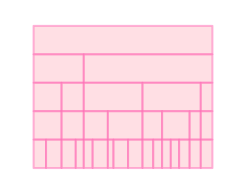
Definition
Visualisation method for hierarchical data, representing nodes of a tree as rectangles aligned by level
- visualizes tree data
Anatomy
An icicle plot represents hierarchical data (tree data) with a quantitative attribute through a series of rectangular bars stacked in vertical or horizontal layers. Each rectangle represents a data segment (tree node), with its width or height proportional to a specific quantitative attribute. Parent categories occupy larger segments, while child categories are nested within them, creating a cascading, “icicle-like” appearance.
Interpreting a icicle plot
Assuming a typical top-to-bottom layout:
- Each horizontal layer corresponds to a specific “depth” in the tree
- Child nodes are located below their parent node
- The width of a node is proportional to the corresponding quantitative value
When and how to use a icicle plot
Strengths
- Allows quick comparison of proportions
- Provides intuitive visualization of hierarchical structures
- Space-efficient representation of hierarchical data when the depth of leaves is homogeneous
- Supports detailed drilling into nested categories
Caveats and limitations
- Can become cluttered and less space-efficient with very deep hierarchies and/or when the depth of leaves varies a lot
- May overwhelm viewers with complex datasets
Use cases
- Organizational structures
- File system representations
- Budget allocations
- Scientific taxonomies
- Software component breakdowns
Recommendations
- Limit hierarchy depth to 3-5 levels
- Provide interactive exploration capabilities
- Annotate key segments for clarity